
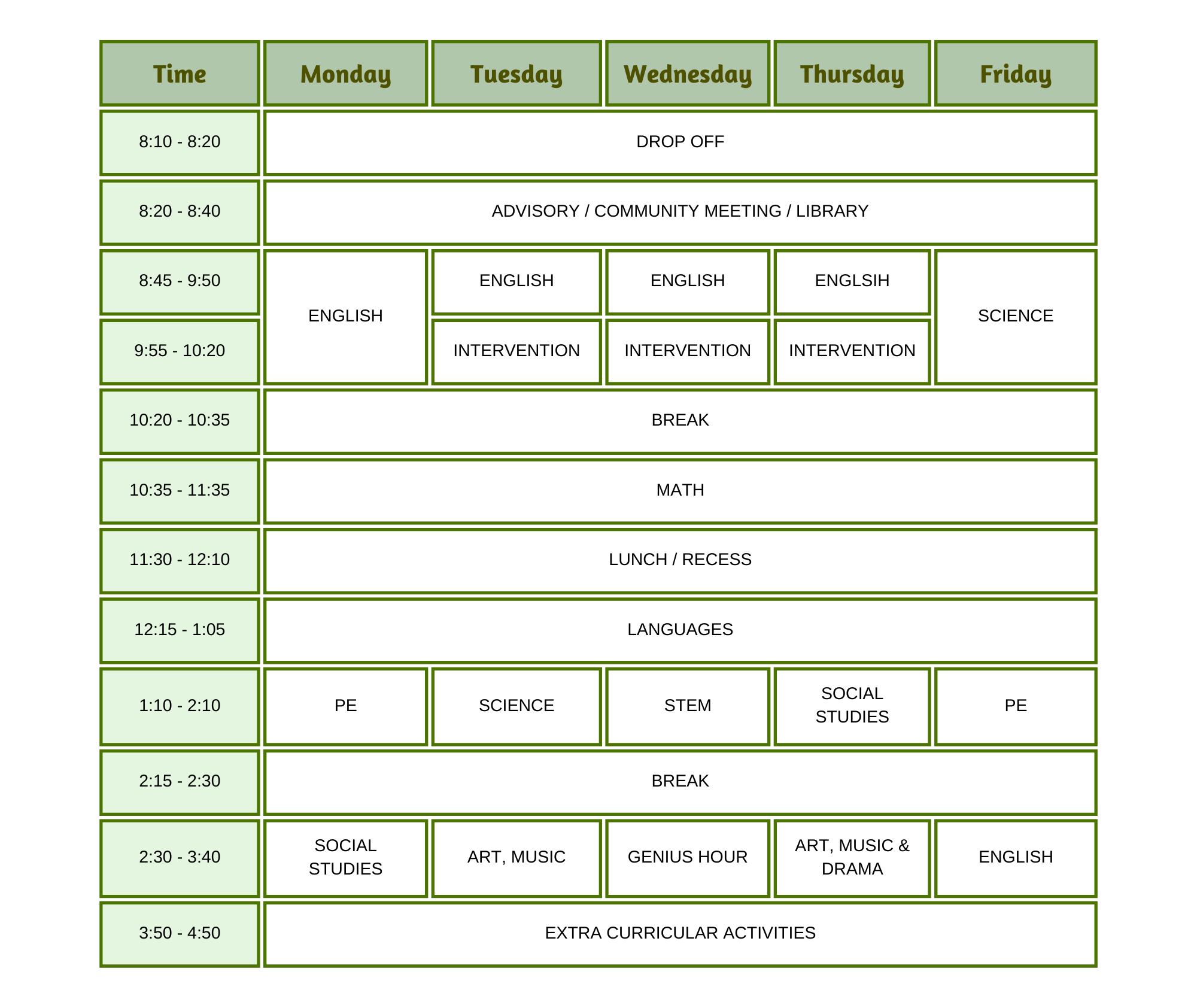
This stage builds on the foundations established in the Early Years and Key Stage 1, preparing children for the next phase of their education. English is taught daily, with a strong focus on developing speaking, listening, reading, and writing skills. Practical, mental, and applied mathematics are fostered through a structured and comprehensive mathematics curriculum.

- English
- Science
- Mathematics
- Social Studies
- Art, Music & Drama

- Physical Education (PE)
- World Languages: EAL, Bahasa Malaysia, Mandarin
- Genius Hour
**Both resources are fully aligned to NGSS standards, and teachers are able to access both to better meet the needs of students.
Physical Education is a subject that helps students develop physical skills, healthy habits, and positive attitudes toward being active. In P.E., students learn to move safely, work together, and respect others while participating in a variety of activities. Regular physical activity helps build strong bodies, confidence, and lifelong wellness.
Art is a subject where students explore creativity, imagination, and self-expression. In art class, students learn to use different materials and techniques to create and share their ideas. Art helps develop fine motor skills, confidence, and an appreciation for creativity and visual expression.
Music is a subject that helps students develop listening skills, creativity, and self-expression. In music class, students learn to sing, move to rhythms, play simple instruments, and understand basic musical concepts. Music encourages teamwork, confidence, and an appreciation for different sounds and cultures.
Drama is a subject that helps students develop communication, creativity, and confidence. In drama class, students explore stories, movement, and expression through role-play and performance. Drama encourages teamwork, imagination, and respect for others while building self-expression skills.
FCIS students are encouraged to think boldly and share their ideas through programs like Genius Hour, where they research and develop self-chosen projects, and the Junior Journalism team, which hones communication and storytelling skills.



Students explore the living world through hands-on investigations, connecting big biological ideas to real-life applications. Using models, microscopes, and inquiry-based labs, students learn how organisms function, grow, and interact with their environments.
Key Highlights:
This exciting course invites students to step into the shoes of real forensic investigators. Students learn to blend concepts from Chemistry, Biology, Physics, and Psychology to solve age-appropriate simulated cases.
Key Highlights:
In this hands-on course, students learn to become creative problem solvers and innovators. Using the engineering design cycle (plan, build, test, improve), students work collaboratively to create solutions for real-world problems.
Key Highlights:
This course introduces students to computational thinking, coding logic, and robotics systems through engaging, hands-on programming experiences. Students learn to write code, debug programs, and bring robots to life through movement, sensors, and automation.
Key Highlights:
Students explore the forces and phenomena that shape our physical world. Through engaging experiments and design-based challenges, students learn core physics concepts such as motion, energy, magnetism, and simple machines.
Key Highlights:
This course blends curiosity, teamwork, and hands-on problem solving. Students engage in multi-disciplinary STEM investigations that encourage creative thinking, making, testing, and refining.
Key Highlights:
Students take ownership of their learning as they conduct semester-long research projects driven by their own curiosity. They then take to the stage to present their discoveries and showcase their innovation and independence.
Our collaborations with schools around the world include pen pal exchanges, Peace Crane projects, virtual visits, and in-person cultural exchanges. As future global citizens, we foster cross-cultural understanding and friendship.
Mandarin, Malay, and Spanish (Grades 5+) help students develop communication skills and cultural appreciation for a multilingual world. All World Language courses meet ACTFL World-Readiness Standards for Learning Languages.
Students become active conservationists, learning to care for local ecosystems and contribute to community-based science projects.
Through the Teaching for Artistic Behavior (TAB) program, students explore art as choice-based creators, developing personal voice and expression.
Students also participate in music classes that allow them access to several different instruments, choir, music theory, percussion, and private music lessons in piano, voice, violin, drums, and guitar.
Grade 5 and 6 students with a flair for the dramatic may also participate in drama where they learn the basics of acting, improvisation, set design, and stage direction. At the end of the semester, drama students show off their acting skills in a schoolwide production.
Our English as an Additional Language (EAL) Program is dedicated to differentiated instruction, ensuring every child gets the necessary support to thrive.


The student has not yet produced enough completed work to assess understanding, or the student requires significant intervention to complete grade level assignments.

The student is approaching grade level content mastery, but teacher support is required for assignments.

The student consistently meets grade-level expectations, but does not yet demonstrate advanced understanding or cannot yet apply concepts in new contexts.

The student consistently demonstrates advanced understanding of grade-level concepts and is able to apply concepts in new contexts.
Our ECA (Extra-Curricular Activities) program is an integral part of our school community, offering a diverse range of enriching opportunities for students to explore their passions, develop new skills, and broaden their horizon beyond the classroom.
PTD 5093 (PLOT 62)
JALAN FOREST CITY 9
FOREST CITY
81550 GELANG PATAH
JOHOR, MALAYSIA.


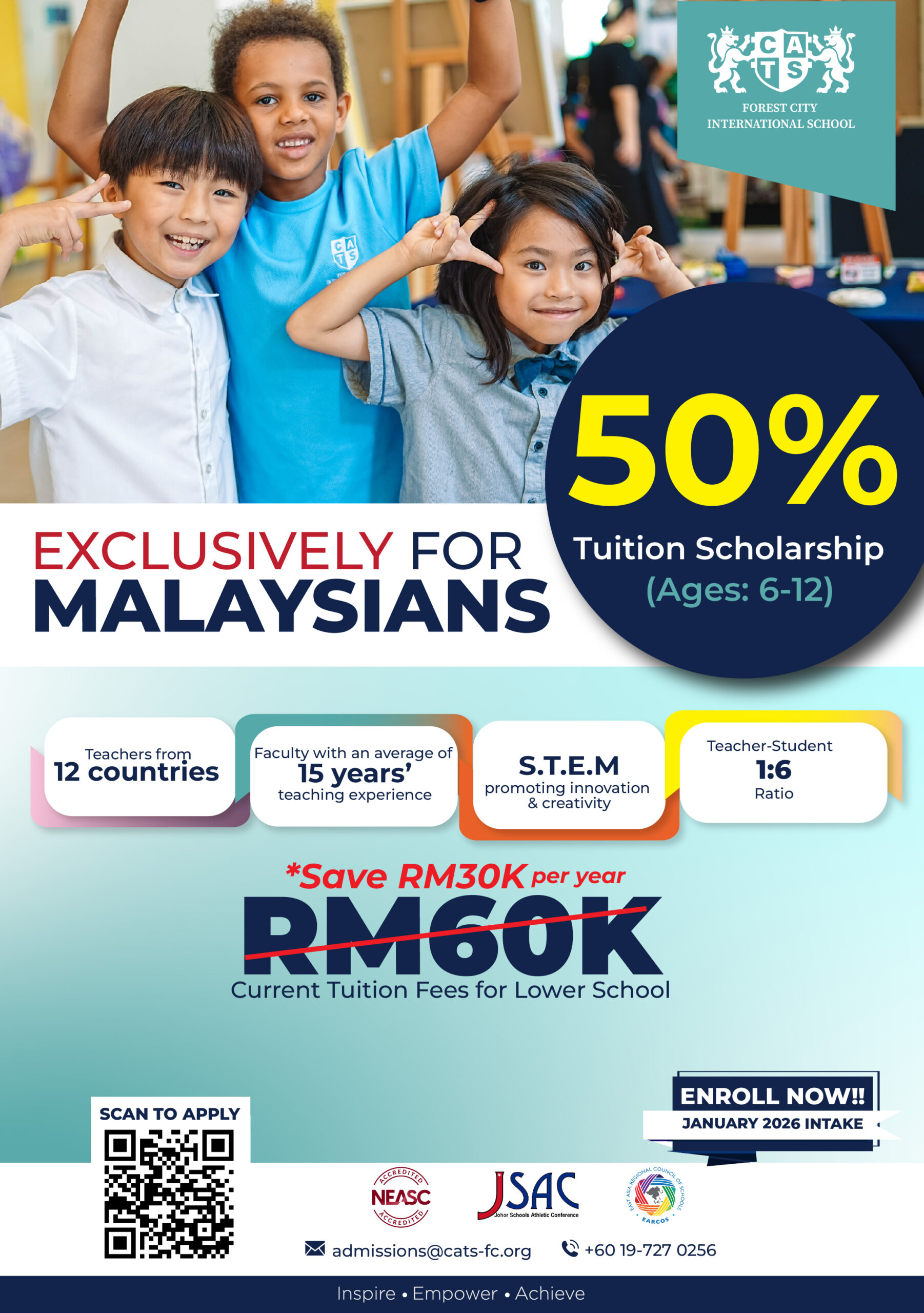
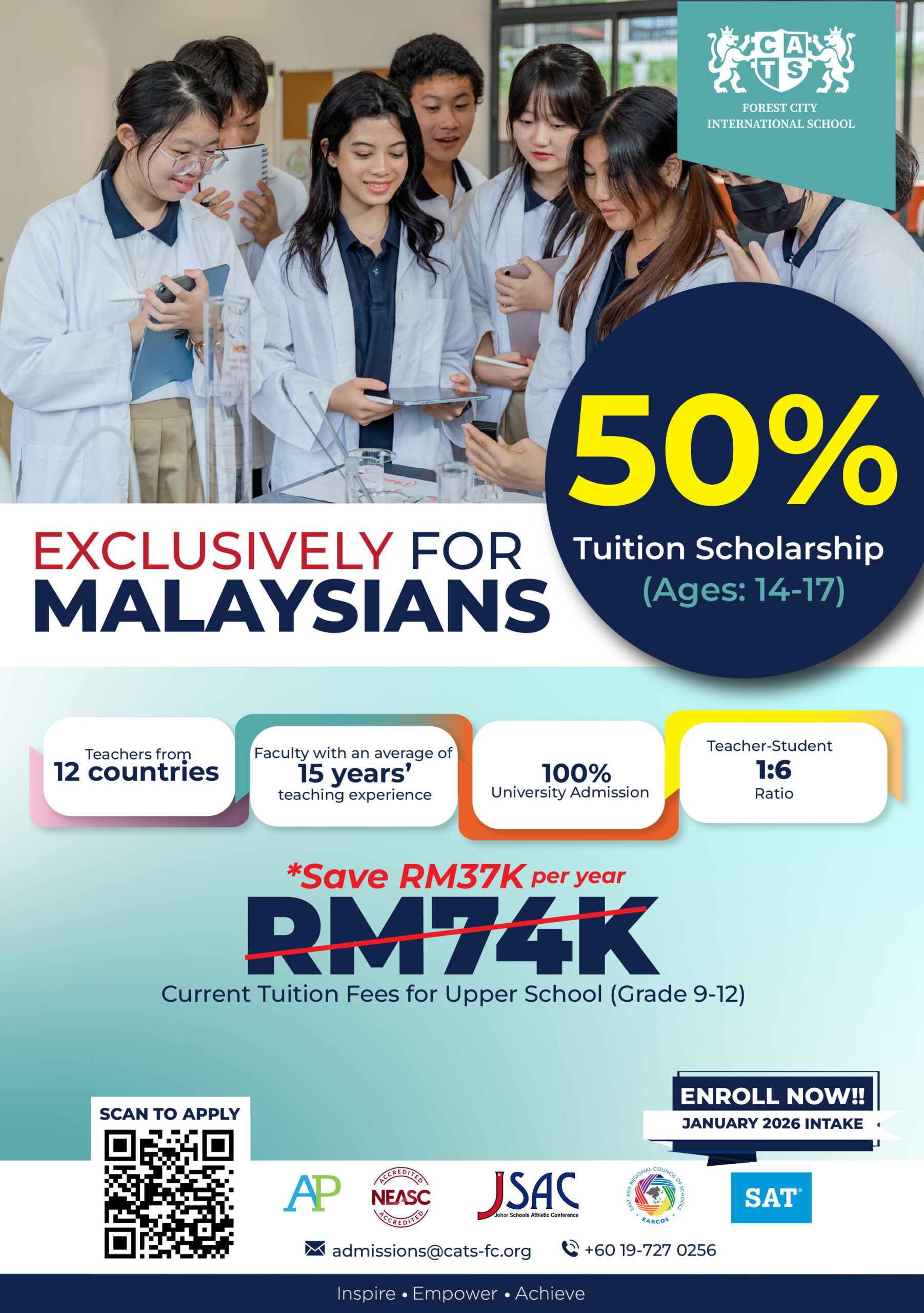
Don’t miss out on this rare chance, enroll now and give your child an advantage that lasts a lifetime at Forest City International School! We inspire, we empower and we achieve together!